
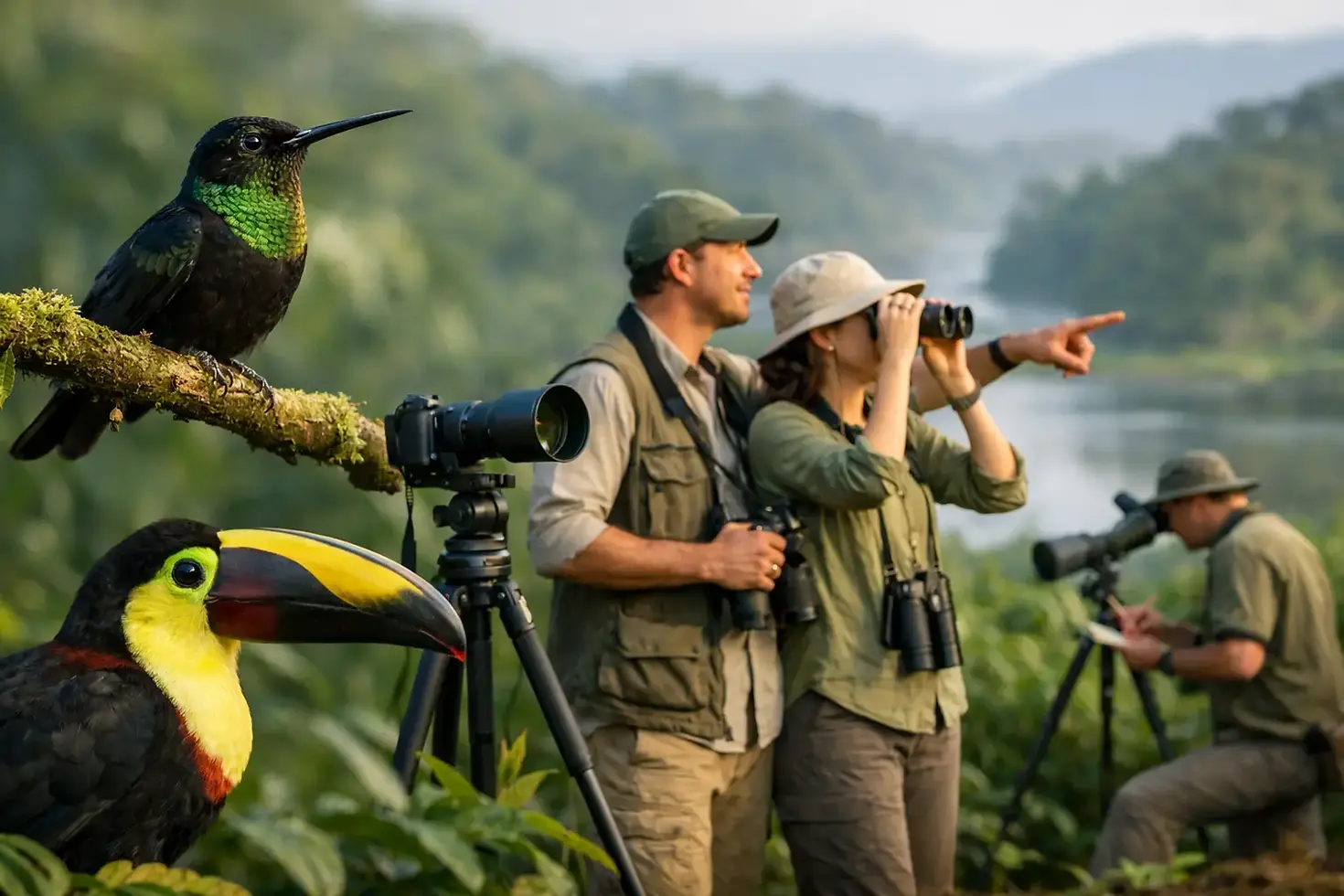
Birding Tours Supporting Conservation
At first light in the Andes, the difference between a casual outing and a meaningful journey can be measured in more than species numbers. It can mean whether forest is kept standing, whether local families benefit from protecting wildlife, and whether your visit leaves a place stronger than you found it. That is why birding tours supporting conservation matter so much in Colombia, where extraordinary biodiversity and real conservation pressure exist side by side.
For many travelers, the question is no longer just Where can I see the most birds? It is also How does my trip affect the places I came to admire? In a country with antpittas, tanagers, toucanets, hummingbirds, and regional endemics spread across highly varied habitats, your tour choice shapes more than your checklist. It also influences local jobs, land stewardship, and the long-term health of birding sites.
If you want a Colombia trip that combines serious birding, smooth logistics, and real conservation value, this is where working with an experienced local operator makes a difference. Birding Medellín organizes fully guided experiences with professional bird experts, 24/7 support in English and Spanish, and the kind of site knowledge that helps guests bird safely, comfortably, and efficiently. Every booking also supports protection of a private mountain reserve in Jardín. To plan your trip, visit https://www.birdingmedellin.com.
Why birding tours supporting conservation matter
Birding tourism can be one of the most practical forms of conservation finance. Birds are valuable because people travel to see them, and that creates a reason for landowners, communities, and local businesses to keep habitat intact. In Colombia, that logic is especially powerful. Many of the country’s best birding regions are rural landscapes where forest protection competes with agriculture, development, and other land uses.
When a tour is built responsibly, visitor spending does not stop with the guide. It reaches drivers, lodge owners, cooks, reserve staff, local feeders, and nearby communities. That wider economic chain gives conservation a local constituency. People are more likely to protect a forest patch when it creates steady income and international visibility.
Still, not every nature trip deserves the conservation label. Some operators use the language of sustainability loosely, while delivering little direct benefit to habitats or communities. A genuinely conservation-minded tour usually has clearer signs: it works with local expertise, supports protected or privately conserved areas, respects site limits, and treats wildlife observation as something to be done carefully rather than extracted as a product.
What responsible birding tours should actually do
The best tours do two things at once. They help guests find birds efficiently, and they reduce the friction that often leads travelers to make poor choices in unfamiliar destinations. That practical side matters more than people think. When transportation, timing, site access, and lodging are well organized, pressure on sensitive areas tends to be lower because visits are more controlled and purposeful.
Good guiding is also part of conservation. Skilled local guides know where to position a group, when to stay back, how to manage playback responsibly, and which trails or feeding stations are suitable under current conditions. They can adapt when weather, breeding activity, or site sensitivity makes a more cautious approach necessary. That judgment protects the birds and usually produces a better field experience anyway.
This is where there is a real trade-off. Travelers often want maximum species in limited time, especially on short Colombia itineraries. That is understandable. But chasing numbers without local knowledge can lead to rushed movement, poor site etiquette, and unnecessary disturbance. A professionally organized tour balances ambition with field ethics. It helps you see a lot while keeping the experience grounded in respect for habitat and wildlife.
Birding tours supporting conservation in Colombia
Colombia is one of the clearest places to see how bird tourism and conservation connect. Around Medellín alone, birders can access cloud forest, lower montane forest, dry forest pockets, river corridors, and productive Andean slopes within manageable travel times. Expand to Jardín, Río Claro, San Rafael, Minca, Santa Marta, Manizales, or Cali, and the habitat diversity becomes even more striking.
That diversity is thrilling for visitors, but it also means conservation works site by site. One reserve may protect key tanager flocks and mixed-species activity in humid montane forest. Another may matter because it shelters a localized endemic or offers a corridor between fragmented forest blocks. A responsible operator understands those differences and builds itineraries around places that are biologically valuable, logistically realistic, and beneficial to the people maintaining access.
For travelers, this has a practical benefit. You are not just visiting famous names on a map. You are being taken to places that fit the season, your target species, your pace, and your comfort level. That matters whether you are a beginning birder hoping for brilliant close views or an experienced lister with very specific goals.
What your booking can support beyond the checklist
A well-designed birding trip supports conservation in visible and less visible ways. The visible side includes reserve entrance fees, local employment, and direct spending in rural areas. The less visible side includes confidence. Communities and landowners become more confident that birds are worth protecting when knowledgeable visitors keep coming back, asking for local guides, and valuing intact forest more than cleared land.
This is one reason private reserves matter so much in Colombian birding. They often protect habitat that would otherwise be vulnerable, and they can respond quickly to local conditions. When tour income helps keep those reserves operating, conservation is not just an abstract goal. It becomes part of the everyday economics of the landscape.
For Birding Medellín, that connection is direct. Each booking contributes to the protection of a private mountain reserve in Jardín, one of the country’s most rewarding birding areas. That gives travelers a simple way to align their trip with habitat protection, without sacrificing comfort or field quality.
Why guided birding is often the better conservation choice
Independent birding has its place, and experienced travelers sometimes prefer the freedom. But in Colombia, guided trips often make better conservation sense. Local experts know how to distribute effort across sites, avoid unnecessary repeat pressure, and manage timing so groups are not arriving at the wrong moment or entering habitats inefficiently. They also help visitors avoid common safety and access issues, which is part of making ecotourism sustainable over time.
There is also a quality argument. When your guide knows each location deeply and understands where target birds are currently active, you spend less time guessing and more time observing. That means fewer wasted transfers, fewer rushed detours, and less temptation to push into marginal situations. For guests, the result feels easier. For habitats, it is usually better managed.
This is especially valuable for international visitors arriving with limited vacation days. Many want an all-in-one service that covers transportation, lodging coordination, meals, travel insurance, expert guiding, and practical bird knowledge in the field. When those pieces are handled professionally, you can focus on the experience instead of the stress of planning in a new country.
How to choose a conservation-minded birding operator
Look for specifics rather than slogans. Ask what conservation support is built into the trip. Ask who is guiding you and how well they know the site. Ask whether the company works regularly in the destinations it promotes. Ask how logistics are handled and whether support is available if plans change. Serious operators answer clearly because they do this every day.
Reputation matters too. Consistently high guest reviews usually reflect more than friendliness. They often indicate reliability in the field, honest communication, and the ability to match birding goals with real-world conditions. A company with a 5.0 Google review rating, bilingual support, and guides recognized for their field expertise gives travelers a strong signal that the experience will be both professional and rewarding.
It also helps to choose a company that can tailor the trip. Conservation-friendly tourism is not one-size-fits-all. A wildlife photographer may need different pacing than a fast-moving lister. A couple on a first birding trip may need more interpretation and comfort support than an advanced birder. Flexible planning leads to better experiences and usually less strain on sites because the day is designed well from the start.
A better way to bird in Colombia
The real appeal of conservation-minded birding is that it adds depth to an already remarkable experience. Seeing a flock of multicolored tanagers at eye level is unforgettable on its own. Knowing that your visit helps keep that forest protected makes the memory more grounded and more honest.
Colombia rewards travelers who bird with intention. Choose expert local guidance. Choose well-run logistics. Choose operators that know their sites thoroughly, support the landscapes they use, and make it easy to travel with confidence in English or Spanish. You will likely see more birds, and your visit will mean more.
Discover Colombia's spectacular birdlife with the experts! Book your next birdwatching tour at Birdingmedellin.com or chat with us on WhatsApp: +573113227676 we speak English and Bird.


Comments